
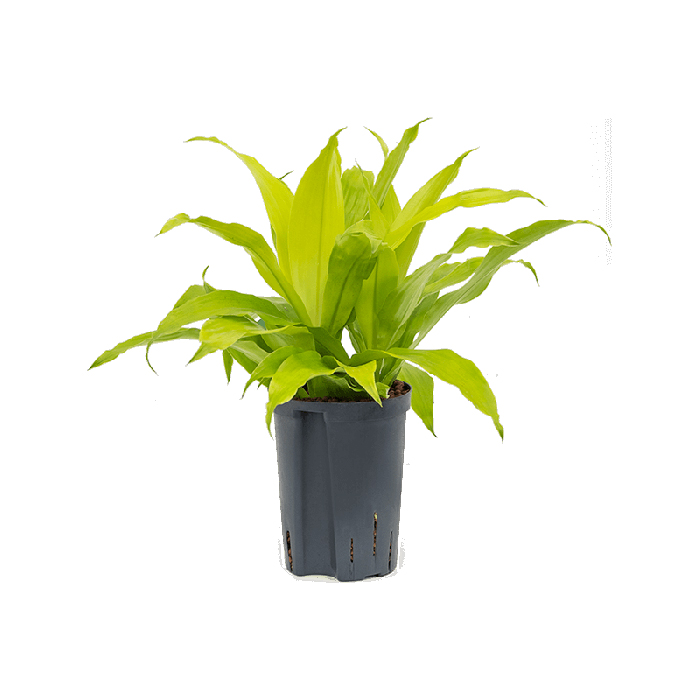
Dracaena fragrans Limelight
Maintenance Level
Low
Placements
Outdoor shades- indoor
Toxic
Yes
Fragrance
None
Seasons
All weather
Plant Height
15ft to 50ft
Water Frequency
Winter
Twice a week
Summer
Daily
Fertilizer Frequency
Winter
2-3months
Summer
2-3months
Tropical African evergreen tree Dracaena fragrans, also known as the "corn plant," gained popularity as an interior plant in Europe in the middle of the 1800s and in the United States in the early 1900s. Their growth is relatively sluggish, starting from thick canes or stems that yield long, narrow leaves that resemble corn stalks and rise upward. Because of their growth habit, they also resemble palm trees, which is why they are occasionally referred to as "false palms." Their height and narrow shape make them excellent houseplants; in containers, they usually grow to a maximum of 4 to 6 feet.
<b>Type of soil</b><br> The soil needs potting soil mix and organic soil.<br> <b>Type of fertilizer</b><br> All purpose of fertilizer<br> SLOW Growth Pattern<br> Trimming for three to four months<br> Every 17–18 months, repot<br><br> <b>Process</b><br> 1.According to the University of Arizona, this plant needs mild light. It cannot withstand direct sunshine, thus it requires light.<br> 2.If the organic soil in the pot of the plant you bought isn't well-draining, replace it.<br> 3.To allow the fluoride evaporate, fill a small pail with tap water and leave it outside for a whole day.<br> 4.Use a spray bottle loaded with water to mist your plant once a day. This is essential since maize plants need a humid atmosphere to thrive.<br> 5.Fertilize the soil around the corn plant once every three months.
1. Get rid of air pollutants<br> 2. Ornamental Objectives
Dos
Distilled water can be used instead of tap water. the planting hole needs to be at least twice as big as the plant bale
Don'ts
1. Prevent flooding<br> 2. Keep the root bale from drying out.