
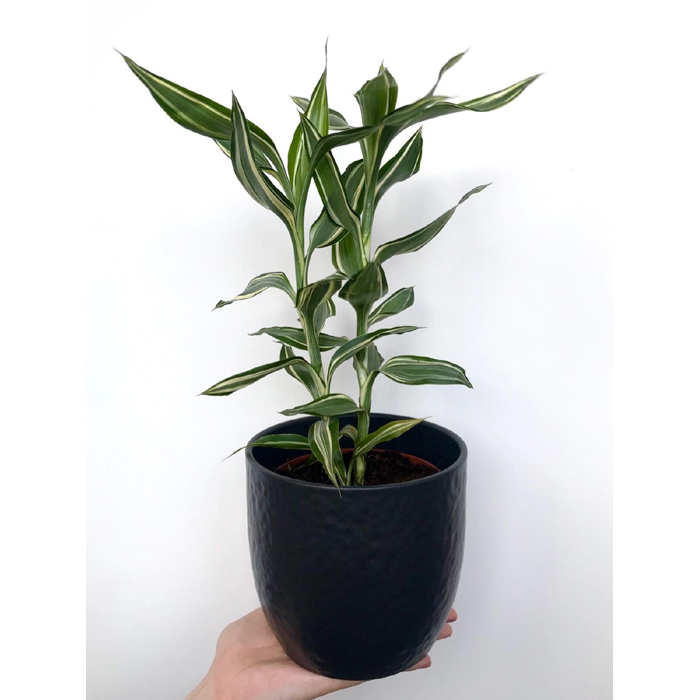
Dracaena sanderiana White Stripe
Maintenance Level
Low
Placements
Indoor
Toxic
No
Fragrance
None
Seasons
All weather
Plant Height
1ft to 5ft
Water Frequency
Winter
Ensure that the roots are always fully submerged in water
Summer
Ensure that the roots are always fully submerged in water
Fertilizer Frequency
Winter
Monthly once
Summer
Monthly once
Sculptural fortunate bamboo plants are often seen in homes and offices for good feng shui. They include striking designs, swirls, or braided stalks.
<b>Type of soil</b><br> Water or soil that is damp yet drains well<br> <b>Type of fertilizer</b><br> Liquid Fertilizer<br> Fast Growth Pattern<br> Trimming for three to four months<br> Lucky bamboo is not shaped and maintained with plant wire and careful trimming like bonsai trees, despite their intricate appearance.<br><br> <b>Process</b><br> 1.Trim the leaves to reveal the growth nodes by taking a stem cutting from the main stalk that contains at least one leaf joint using a sterile, sharp cutting shear.<br> 2.Place the untrimmed portion into a jar with enough distilled water in it to reach the bottom.<br> 3.As you wait for red roots to appear, make sure the water is pure and fresh. About 30 days should pass before roots show up.<br> 4.Once the roots show through, place the stalk in a soil-filled pot or a decorative vase filled with water and pebbles.
1.thought to bring wealth and good fortune. In Feng Shui, the Lucky Bamboo indoor plant is very significant.<br> 2.Simple to cultivate.<br> 3.requires very little upkeep.<br> 4.purifies the air in your house.<br> 5.lovely decorative element.
Dos
To keep your lucky bamboo happy and healthy, give it new water every seven to ten days.
Don'ts
Your fortunate bamboo's leaves will wilt and turn a pale brown or yellow from too much light.