
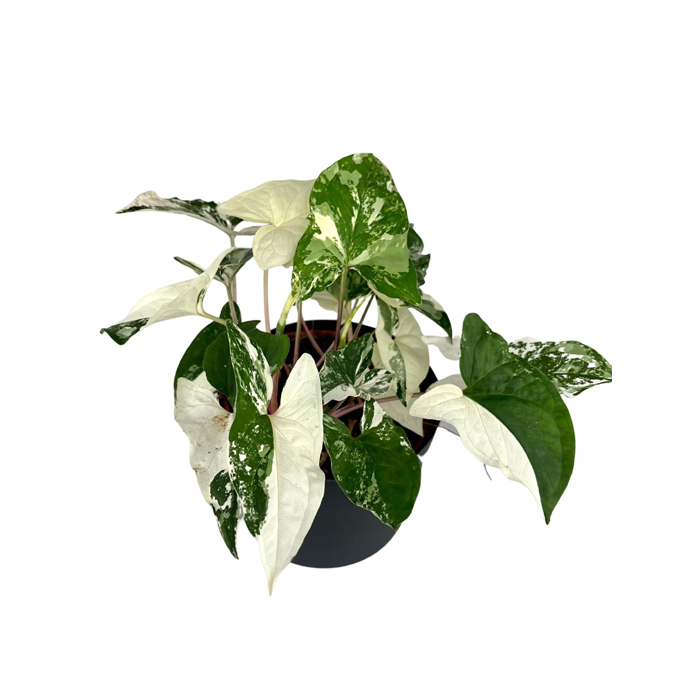
Syngonium Emerald gem
Maintenance Level
Low
Placements
Indoor
Toxic
Yes
Fragrance
None
Seasons
All weather
Plant Height
6ft to 15ft
Water Frequency
Winter
Weekly once
Summer
Twice a week
Fertilizer Frequency
Winter
3-4months
Summer
2-3 months
The plant features rather big, dark green, arrowhead-shaped leaves with light green veins on short leaf stalks. To keep the foliage color vibrant, occasionally place the plant in direct sunlight. Syngonium requires light to moderate irrigation. Watering indoor Syngonium twice a week is possible.
<b>Type of soils:</b><br> Mixture should be loose and well-draining, with equal amounts of potting soil<br> <b>Type of fertilizer:</b><br> Dilute liquid fertilizer<br> Trimming for one to two months<br> Repotting 2years once<br> <b>Process</b><br> 1. Position the nephthytis close to a window so that it will get bright yet indirect light.<br> 2. To maintain humidity surrounding the plant, fill the drainage tray with pea gravel and set it underneath the container to catch any extra water runoff while watering.<br> 3. When the soil is one inch below the surface and somewhat damp, thoroughly water the area.<br> 4. Every two months, feed the nephthytis a half-diluted fertilizer.<br> 5. When leaves turn brown and die, pinch back stems to the first leaf that is green. Certain stems are leafless when they grow.
With the help of Syngonium Emerald Gem, you can efficiently filter the air in your living room by eliminating hazardous pollutants like benzene and formaldehyde.
Dos
The Syngonium Podophyllum Emerald Gem does best in arid settings. Water can remain on leaves when you spritz your plant or provide more humidity, which can foster the growth of dangerous fungi. Well-draining soil is ideal for Syngonium Podophyllum Emerald Gem cultivation
Don'ts
Avoid oversaturating the leaf-containing soil.