
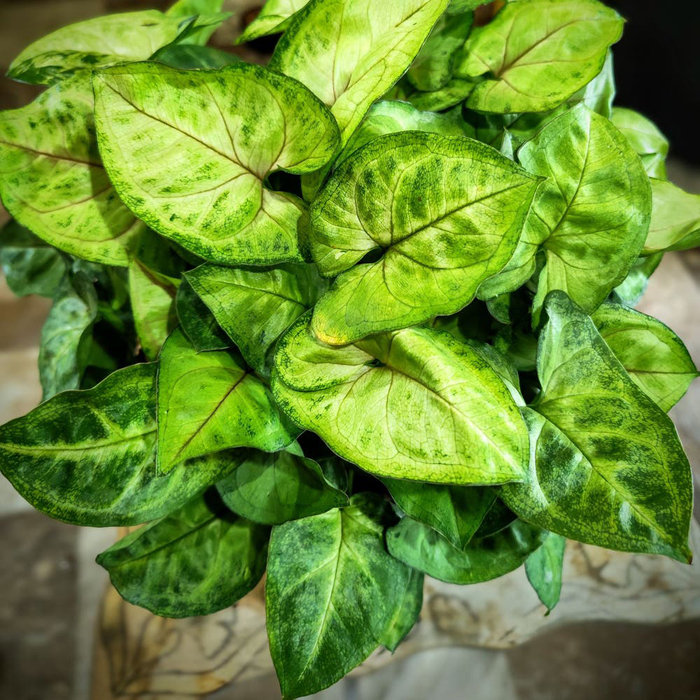
Syngonium Julia allusion
Maintenance Level
Low
Placements
Indoor
Toxic
Yes
Fragrance
None
Seasons
All weather
Plant Height
3ft to 6ft
Water Frequency
Winter
Weekly once
Summer
Twice a week
Fertilizer Frequency
Winter
3-4months
Summer
2-3 months
Coppery pink hues accentuate the pale green foliage of Julia nephthytis! This little plant looks great above tabletops and workstations in the workplace.
<b>Type of soils:</b><br> Mixture should be loose and well-draining, with equal amounts of potting soil<br> <b>Type of fertilizer:</b><br> Liquid fertilizer<br> Trimming for one to two months<br> Repotting 2years once<br><br> <b>Process</b><br> 1. Position the nephthytis close to a window so that it will get bright yet indirect light.<br> 2. To maintain humidity surrounding the plant, fill the drainage tray with pea gravel and set it underneath the container to catch any extra water runoff while watering.<br> 3. When the soil is one inch below the surface and somewhat damp, thoroughly water the area.<br> 4. Every two months, feed the nephthytis a half-diluted fertilizer.<br> 5. When leaves turn brown and die, pinch back stems to the first leaf that is green. Certain stems are leafless when they grow.
Not only are sedum plants ornamental, but they also contain anti-pollutant and air-cleaning properties. These plants can lessen volatile organic chemicals like benzene, formaldehyde, toluene, and xylene as well as other elements of indoor air pollution.
Dos
Avoid bright light sources at all costs to avoid burned leaves. Turn your plant occasionally to promote uniform development.
Don'ts
Avoid oversaturating the leaf-containing soil.