
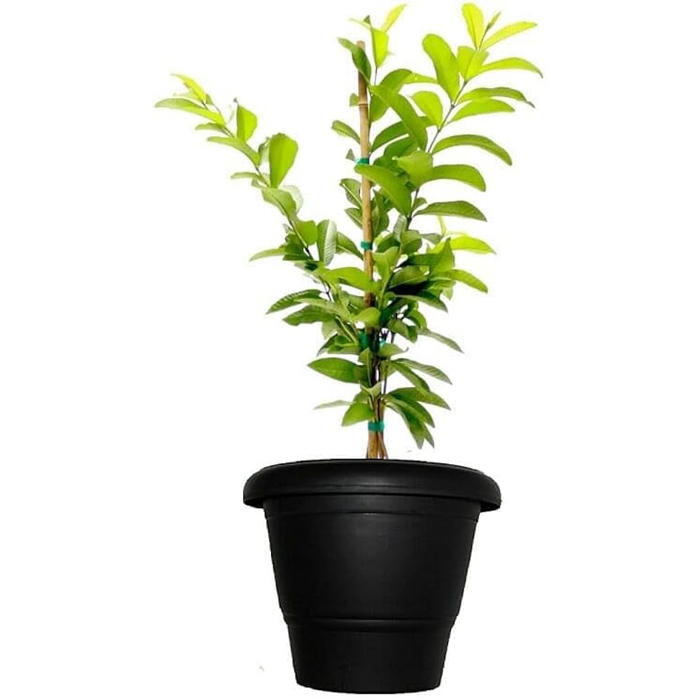
Guava Banarasi
Maintenance Level
Low
Placements
Outdoor and Indoor
Toxic
No
Fragrance
Low
Seasons
All Weather
Plant Height
8ft to 32ft
Water Frequency
Winter
Once a week
Summer
Daily
Fertilizer Frequency
Winter
1-2 months
Summer
Yearly 3-4
The very appealing plants yield sweet, luscious fruits that taste great either fresh or as a dessert. Psidium guajava, the botanical name for guavas, are small, evergreen trees or shrubs in the Myrtaceae family that are cultivated for their edible fruits.
<b>Type of soils</b> <br> Well-drained soil or potting mix highly rich in organic matter.<br> <b>Type of Fertilizer</b><br> Organic fertilizer (seaweed fertilizer)<br> <b>Development Trend Moderate</b><br> PROPAGATION: Air-layering, grafting, and cutting are the methods used.<br> REPOTTING: Transplanting a plant into a larger pot or larger garden space when there is excessive root growth in the container.<br> PRUNING: Prune the tree to keep it in form and get rid of any damaged, dead, or dry limbs. to encourage the production of fruit.<br><br> <b>Process</b><br> 1.14–24 inch pots or containers are suitable for growing guava fruit plants.<br> 2.Well-drained soil or nutrient-rich potting mix are preferred by soil.<br> 3.watering plants at least once a week, especially in hot weather.<br> 4.It needs to be in direct sunshine for at least eight hours per day.<br> 5.Plant growth is aided by the feeding of any organic fertilizer, such as fish emulsion, bone meal, and seaweed fertilizer.
Fruit is frequently consumed raw or prepared into drinks, jams, and other dishes. The fruit and leaves of the plant are among the parts that are utilized medicinally. Guava leaves are used to treat diabetes, ulcers, stomach and intestinal disorders, and discomfort.
Dos
To prevent fungal disease, irrigate the tree's base with water, being careful not to soak the foliage.
Don'ts
Avoid overwatering or allowing rainwater to accumulate to the point where standing water appears in the plant's pit area. Your plant will eventually die as a result of the harm to the roots.