
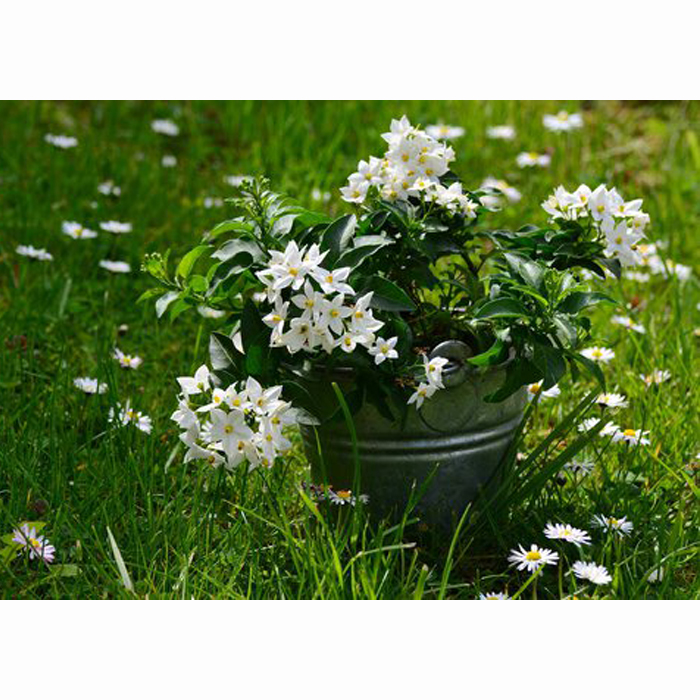
Green Jasmine (Jasminum odoratissimum)
Maintenance Level
Low
Placements
Outdoor
Toxic
No
Fragrance
Yes
Seasons
All weathers
Plant Height
15ft to 30ft
Water Frequency
Winter
Daily
Summer
Daily
Fertilizer Frequency
Winter
6months
Summer
2-3 weeks
The tiny, white blossoms of the green jasmine plant provide a pleasant fragrance. The leaves of this glossy, dark green climbing vine are lustrous.
<b>Type of soil:</b><br> Loamy, moist but well-drained are needed.<br> <b>Type of fertilizer:</b><br> balanced 10-10-10 liquid fertilizer .<br> Fast Growth Pattern<br> Pruning : When winter arrives, cut off any dead branches and blossoms that are above their nodes.<br> Repotting: repot it every 3 years.<br><br> <b>Process</b><br> 1.Select a location that is ideal for your jasmine plant.<br> 2. Get the ground ready for planting. The majority of jasmine varieties thrive on rich, draining soil.<br> 3. Maintain a damp environment. Throughout the growing season, water the soil surrounding the jasmine plant to keep it damp but not wet.<br> 4. Give the jasmine a monthly fertilization. Fertilizing the jasmine once a month will keep it blooming during the growing season.<br> 5. Cut the jasmine bushes. During the growing season, pinch off dead leaves, blossoms, and stems, or use hand pruners to make a cut that is flush with the plant's main stem.
Jasmine is applied topically to treat skin conditions, decrease the production of breast milk, and expedite the healing of wounds.
Dos
1.Keep the drip tray empty at all times and water the jasmine plant thoroughly until water emerges from the drainage pores.<br> 2.Water less frequently during the winter.<br> 3.When the vines are young, they must be taught early on.<br> 4. Just before new growth emerges in the spring, fertilize the plant.
Don'ts
Feeding the plant in the planting hole discourages it from establishing roots and searching for nourishment.